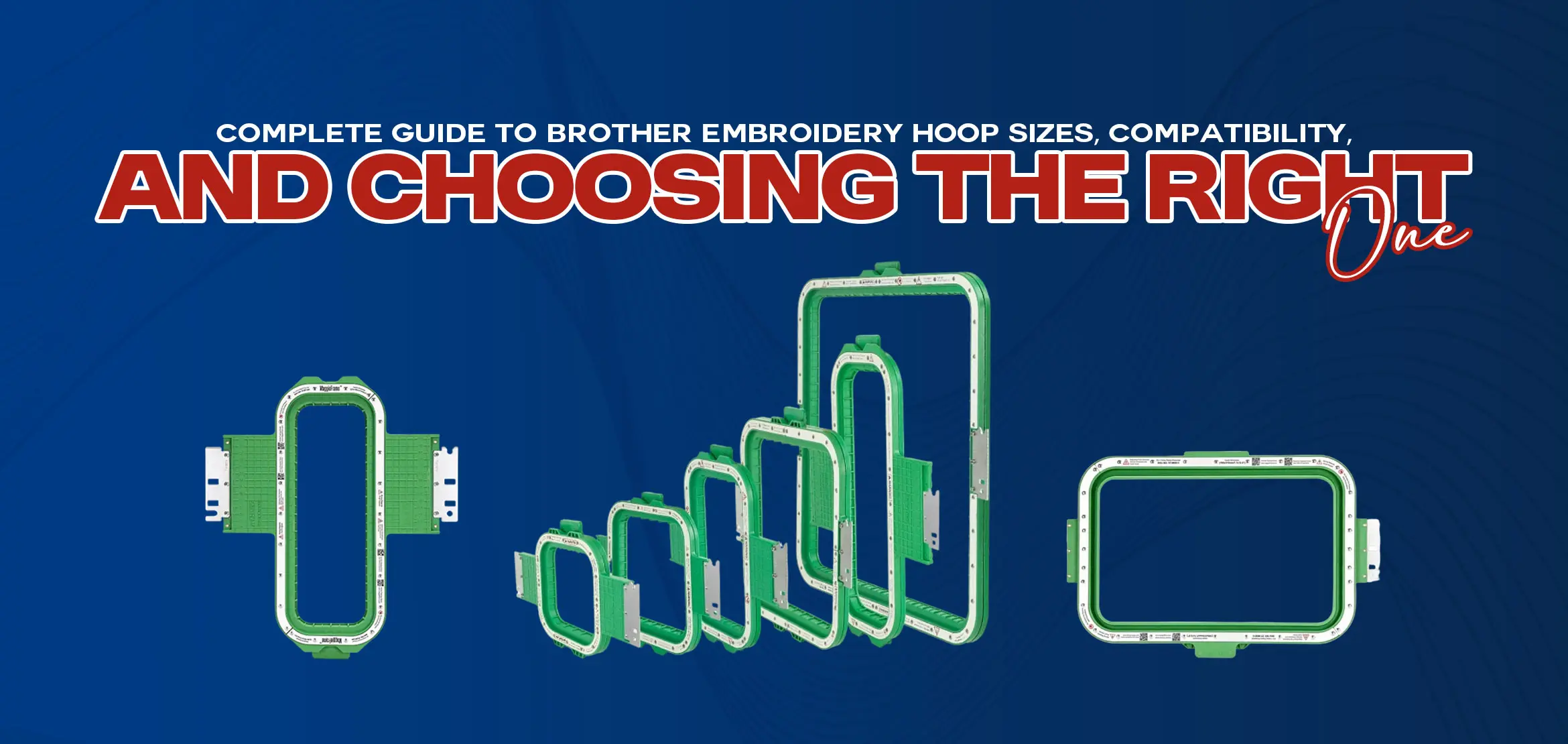
Complete Guide to Brother Embroidery Hoop Sizes, Compatibility, and Choosing the Right One
Table Of Content
- Mastering Brother Embroidery Hoop Sizes
- Comprehensive List of Brother Hoop Sizes and Machine Compatibility
- Standard Hoop Sizes Explained (4"x4", 5"x7", 6"x10")
- 4" x 4" Small Hoop
- 5" x 7" Medium Hoop
- 6" x 10" Large Hoop
- Specialty and Extra-Large Hoops (8"x12" to 10 5/8"x16")
- 8" x 8" Hoop
- 8" x 12" Extra Large Hoop
- 8" x 14" Hoop
- 9.5" x 14" Hoop
- 12" x 8" Jumbo Hoop
- Machine-Specific Compatibility Charts
- Standard Hoop Sizes and Dimensions
- Model-Specific Compatibility Guide
- Specialized Hoops for Unique Applications
- Magnetic vs Traditional Hoops: Performance Breakdown
- Limitations of Traditional Snap-On Hoops
- Side-by-Side Performance Comparison
- Choosing the Right Hoop: Project-Based Guidelines
- Summary
Most of the embroidery problems don't come from the design itself. They happen because of using the wrong hoop. People spend time fixing stitches, choosing colors & setting designs but when the fabric moves, the design shifts or part of it gets cut off. Mostly, the hoop size is the real issue.
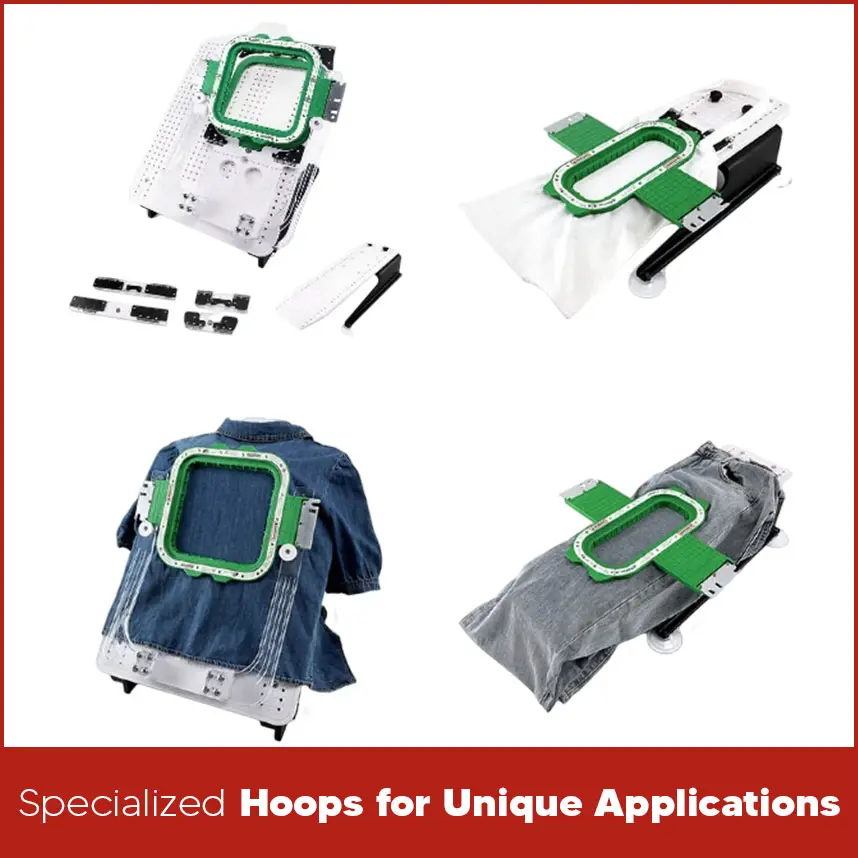
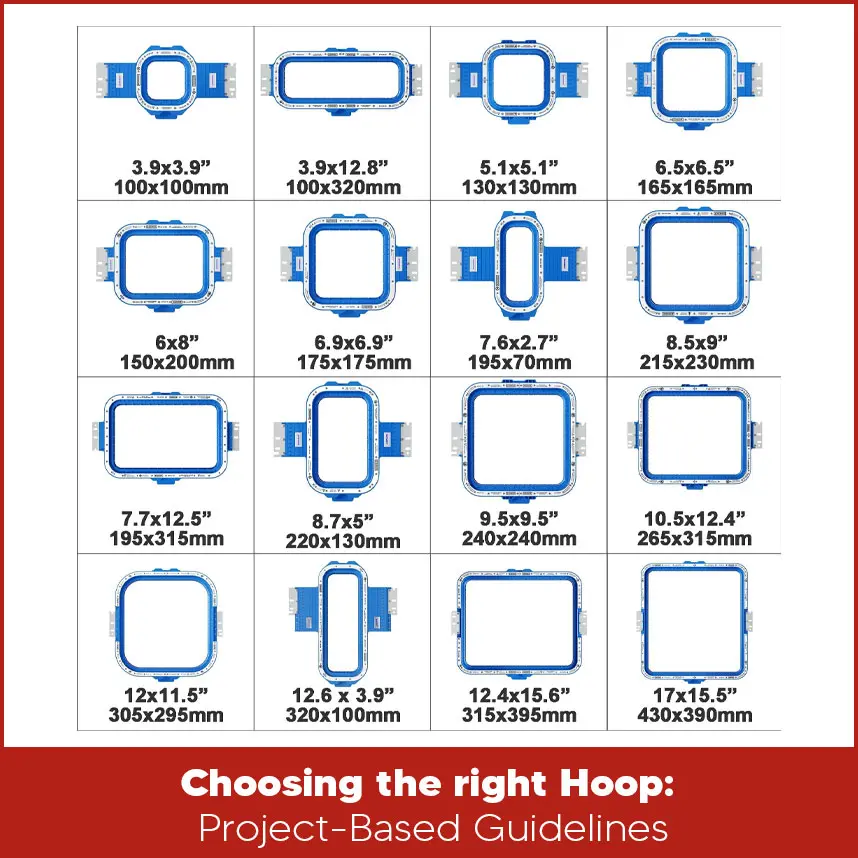
Brother embroidery hoops are made in different sizes for a reason. Every size of hoop is meant for a specific type of work. When you know which hoop to use, your stitching becomes cleaner, lines stay straight and the fabric stays in place. This interesting guide will cover Brother embroidery hoop sizes in an easy way so you can make better choices & avoid common mistakes. So let's start reading. Brother embroidery hoop size means the space where the design can be stitched. This area holds the fabric tight while the design runs. The hoop size decides how big your design can be in one stitch run. A good hoop keeps the fabric firm, which helps avoid wrinkles and loose stitches. Small hoops are better for small logos and fine details. Bigger hoops are useful when you want to stitch larger designs without breaking them into parts. When you understand your hoop sizes, you also save time because you don’t have to rehoop the fabric again and again. Brother machines support different hoop sizes, from small hoops to very large hoops. Not every Brother machine works with every hoop, so compatibility is important. Some machines are made for home use and only support smaller hoops. Others allow larger embroidery areas for bigger projects. Knowing what your machine supports helps you plan designs the right way and avoid errors during stitching. Standard hoops are the most common hoops. They are easy to handle and work well for everyday embroidery projects. 4" x 4" hoop is best for small designs. It is used for left chest logos, caps, sleeves & small text. This hoop holds fabric tightly, which helps keep stitches neat. If your design is small & simple, this hoop usually works best. 5" x 7" hoop gives more space and it is still easy to manage. It works well for medium size logos, patches, and detailed designs. Many Brother machines support this hoop because it has a good balance between size and control. It also reduces the need to split designs. 6" x 10" hoop supports larger designs to stitch in one piece. It is usually used for jacket backs, tote bags & wide designs. This hoop gives more space while keeping the designs properly aligned. Larger hoop use for bigger designs and detailed artwork. These hoops are helpful when you want to stitch large designs without stopping and rehooping. This hoop has a square shape, which works well for balanced designs like badges and framed artwork. It gives more space than standard hoops but is still easy to control. 8" x 12" hoop is commonly used for jacket backs and decorative designs. It helps keep large designs aligned and reduces the need for multiple hoopings. This hoop is good for large or vertical designs. Used for long text or artwork that needs extra height. This size has a wide stitching area for detailed designs. It works well for large patterns where spacing matters. A proper stabilizer is important with this hoop to keep the fabric steady. The jumbo hoop provides one of the largest embroidery areas available. It is used for full jacket backs and large statement designs. This hoop saves time because the design is stitched in one run instead of being split. Most Brother machines support standard hoops but exact support depends on the machine size & embroidery area. Smaller machines handle 4" x 4" or 5" x 7" hoops, while advanced machines support larger hoops. Every Brother machine has a maximum embroidery size. Using a hoop that is very large can cause errors or incomplete stitching. Always match the hoop size with what your machine supports to avoid alignment problems. Brother machines are organized based on the hoop sizes they can use, so you can pick the right one for your projects: Entry-Level Models (like M370, NV180, NV950): These machines work with the 4" x 4" hoop. They are good for beginners or small designs. Mid-Range Models (like F540E, PE800, NS2750D): These support hoops up to 5" x 7", giving you more space for creativity. The SA444 hoop is popular and fits many models such as NV1200, PE750, and PE800. Professional Machines (like NV880E, NQ3700D, PR1X, VE2300): These can handle bigger hoops, usually up to 6" x 10" and some top commercial models even go up to 8" x 12". Cross-Generation Compatibility: Some hoops, like the SA439 (5" x 7"), work with many Brother machines across different generations, including Innovis 1500D, 2500D, 3500D, and older PE-270D models. This makes them a smart choice if you have or plan to upgrade machines in the future. Not every embroidery project works with a standard hoop. Brother offers special hoops made for specific needs. Jumbo hoops are used for large designs like jacket backs and long layouts. They give more space for bigger work but only fit certain Brother machines. Commercial and multi-needle hoops are made for professional use. These hoops are larger and designed for faster production and easy handling during busy work. Magnetic hoops are a popular choice for thick fabrics and hard to hoop items. They are easy to use, hold fabric evenly and help reduce marks on the material. Many users prefer them for frequent hooping projects. Note: Always check if a hoop works with your Brother machine before buying. Compatibility charts can help you avoid problems later. Magnetic hoops use magnets to hold fabric in place instead of clips. They make hooping faster and easier on the hands. Traditional hoops use snap-on frames and clips. They take more effort but still give strong fabric control. Traditional hoops can be difficult to close on thick materials. If not framed carefully, fabric tension may become uneven. Over time, clips may loosen. Still, many people use these hoops because they are affordable and work well when used properly. Magnetic hoops help save time and reduce marks on fabric. Traditional hoops give solid control and work better with delicate materials. The best choice depends on the fabric, project size, and what feels comfortable to use. The right hoop depends on your design size and fabric. Small logos work better in small hoops because tension stays firm. Medium designs fit well in mid-size hoops and reduce rehooping. Large designs need jumbo or extra-large hoops to stay aligned. As long as the hoop matches the design and machine size, the results improve a lot.Mastering Brother Embroidery Hoop Sizes
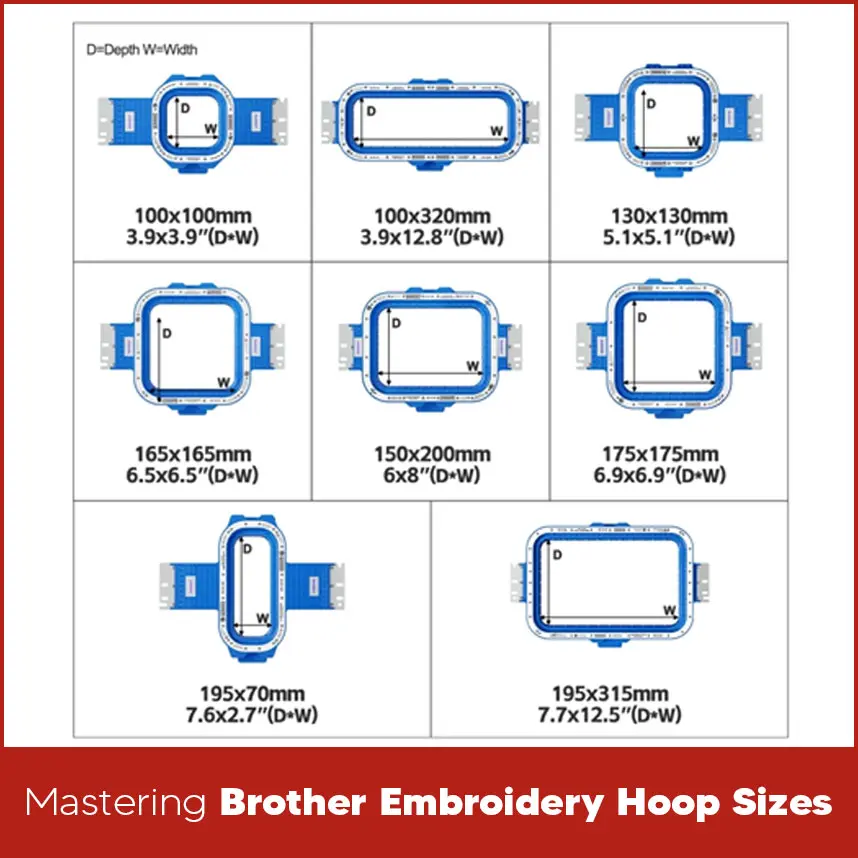
Comprehensive List of Brother Hoop Sizes and Machine Compatibility
Standard Hoop Sizes Explained (4"x4", 5"x7", 6"x10")
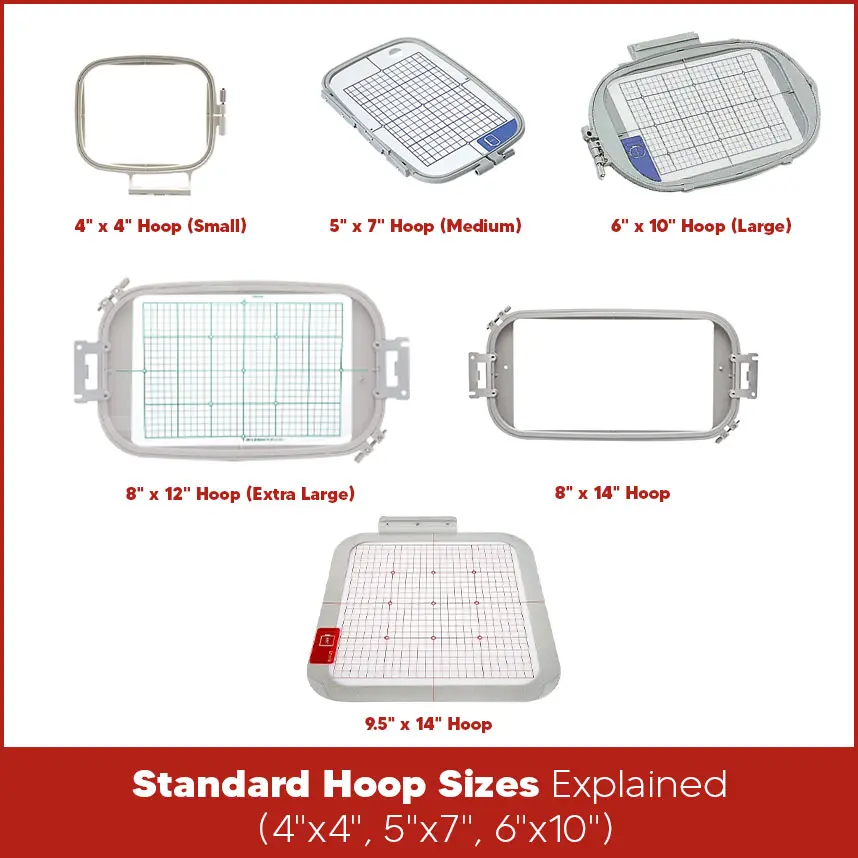
4" x 4" Small Hoop
5" x 7" Medium Hoop
6" x 10" Large Hoop
Specialty and Extra-Large Hoops (8"x12" to 10 5/8"x16")
8" x 8" Hoop
8" x 12" Extra Large Hoop
8" x 14" Hoop
9.5" x 14" Hoop
12" x 8" Jumbo Hoop
Machine-Specific Compatibility Charts
Standard Hoop Sizes and Dimensions
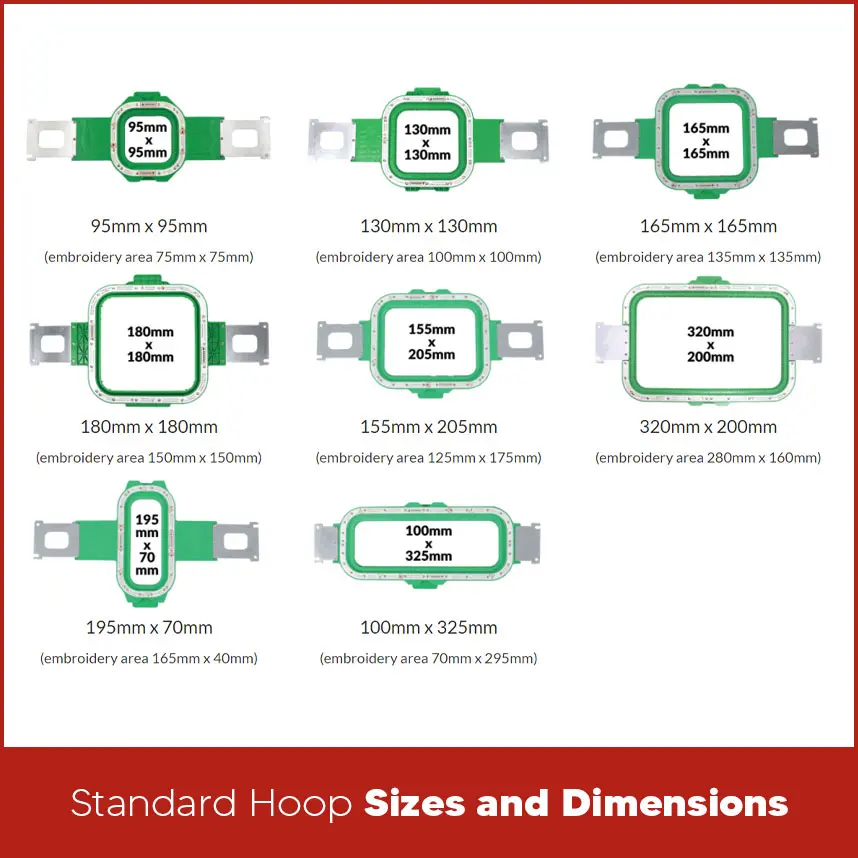
Model-Specific Compatibility Guide
Specialized Hoops for Unique Applications
Magnetic vs Traditional Hoops: Performance Breakdown
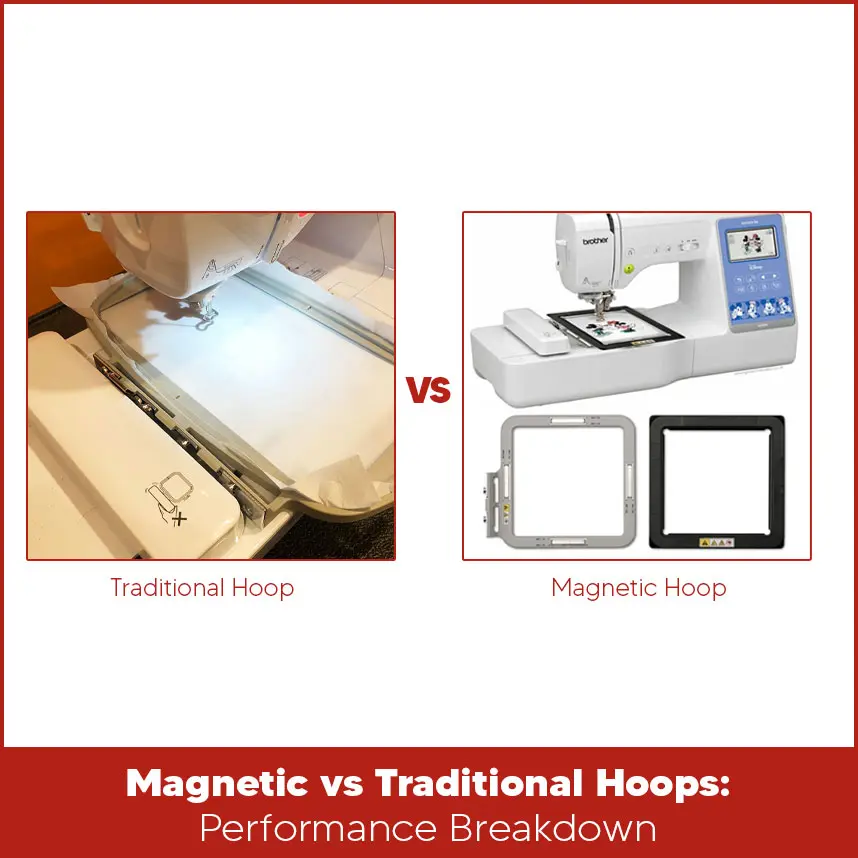
Limitations of Traditional Snap-On Hoops
Side-by-Side Performance Comparison
Choosing the Right Hoop: Project-Based Guidelines
Summary
Understanding Brother embroidery hoop sizes makes embroidery easier and more accurate. Each hoop has a clear purpose, from small logos to large jacket designs. Using the right hoop saves time, protects fabric, and improves stitch quality. For designs that fit perfectly within your hoop size, Digitizing USA provides reliable embroidery digitizing services made to match Brother embroidery requirements. When proper digitizing and the right hoop work together, the final embroidery looks clean and professional.