The Rise of Eco-Friendly Embroidery Threads | Sustainability in Digitizing
Table Of Content
- Need Sustainability in Embroidery Digitizing
- Understanding 4 Important Eco-Friendly Embroidery Threads
- 1. Recycled Polyester Threads
- Benefits
- Cautions
- 2. Organic Cotton Threads
- Benefits
- Cautions
- 3. Lyocell (Tencel) Threads
- Benefits
- Cautions
- 4. Bamboo Fiber Threads
- Benefits
- Cautions
- Future Trends in Sustainable Embroidery Threads
- Summary
In the last few years, many people in the embroidery industry have been moving toward a new direction. It’s no longer enough to make beautiful designs but also care about how those designs are made. The rise of eco friendly embroidery threads marks a turning point in digitizing industry. More digitizers, business owners & individuals want threads that leave a lighter footprint on the environment.
If you’ve ever paused before your next project, wondering whether your thread choice matters or not then you’re at the perfect place. In this blog, we will cover some common and interesting points like why sustainability matters, what kinds of eco friendly threads exist and where the future is headed. Whether you’re just curious or ready to make the greener choice, be read. Your next stitch embroidery design can make a difference.
Need Sustainability in Embroidery Digitizing
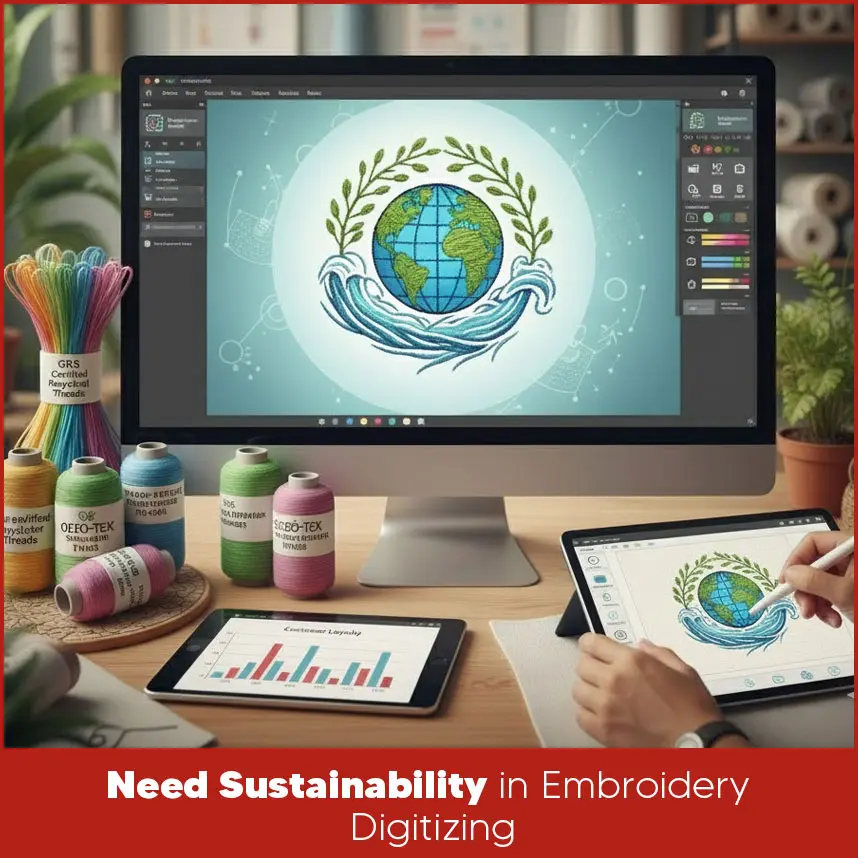
Digitizing embroidery means converting any raster or vector artwork into embroidery stitches. It has an impact on resources, textiles, inks and eventually the environment. In this industry, sustainability should be important for the following main reasons:
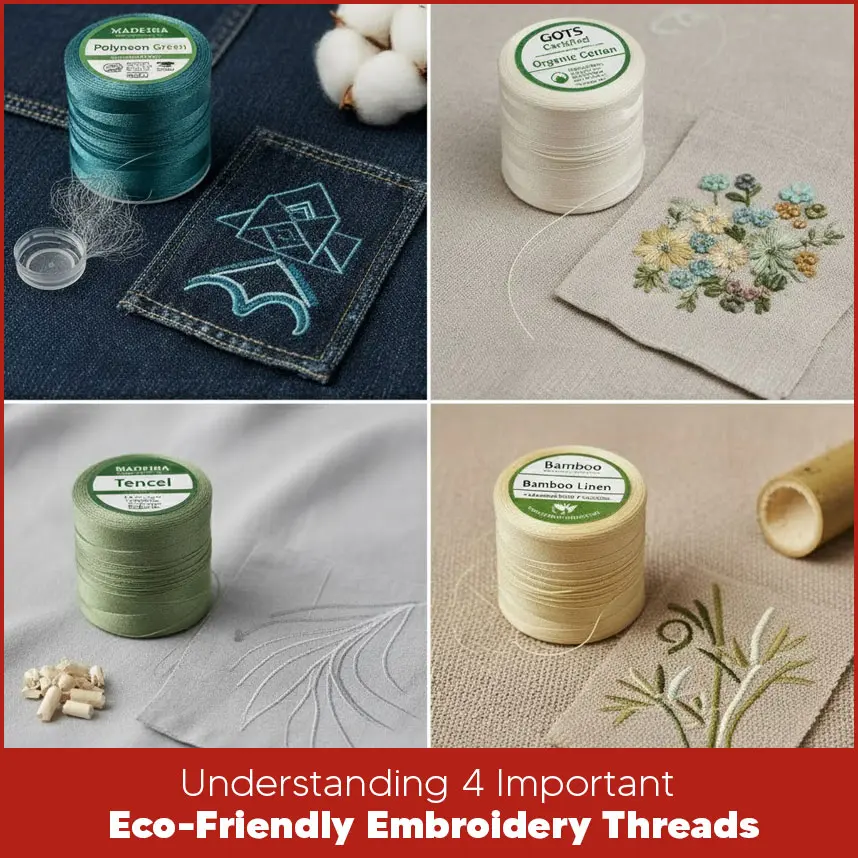
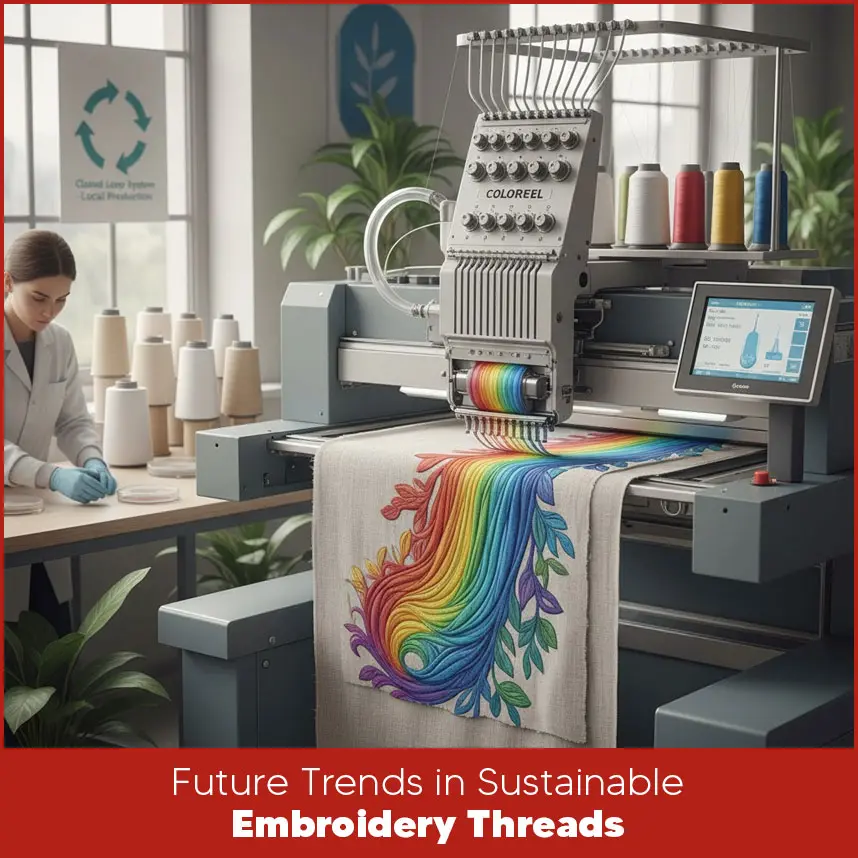
- Conservation of resources: Conventional threads frequently rely on chemically intensive procedures for polymers. The motive of eco-friendly threads is to minimize waste, water consumption and toxic emissions. - Consumer demand: Many customers ask, "Is this thread sustainable or not?" Using eco friendly threads for your embroidery will be a selling point, especially for those buyers who are concerned about eco friendly threads. - Brand reputation: Using eco materials shows responsibility. Over time, that builds trust, especially if your work is visible in stores, on social media or portfolios. - Regulatory & certification incentives: In some markets, certifications like GRS (Global Recycled Standard) or OEKO-TEX give you leverage. Products made with certified threads can access certain labels or retail channels. Although the initial cost of some sustainable threads may be higher, the benefits of less waste, decreased thread breakage and increased customer loyalty may outweigh that cost. Selecting more environmentally friendly materials while digitizing helps bring your art into line with international standards. In this section, we’ll cover 4 main categories of eco-friendly threads. For each, we’ll explain how they’re made, their benefits and what to watch out for. These threads are made from post consumer plastic bottles (PET) or industrial plastic waste. The plastic is cleaned, melted and spun into fibers certified under standards like GRS. For example, Madeira’s Polyneon Green is a 100% GRS recycled polyester thread made from used PET bottles. - It stays strong, shiny, and durable just like regular polyester. - Helps redirect plastic waste from landfills or oceans. - Many options are dye fast and suitable for industrial machines. - Make sure the thread is certified (GRS, OEKO-TEX) so you know the recycled claim is valid. - Some recycled threads may cost more than conventional ones. - The embroidery machine tension may need slight adjustment because fibers can behave a little differently. Organic cotton threads come from cotton that is grown naturally, without the use of chemical pesticides or fertilizers. From the field to the finished thread, every stage follows trusted organic rules such as the Global Organic Textile Standard (GOTS). - These threads are eco-friendly because they can break down naturally and come from a renewable source. - They have a soft and gentle texture, which makes them ideal for embroidery on clothing or fabric that touches the skin. - The process of making them uses fewer chemicals, which is better for workers and the environment. - Cotton threads are weaker than synthetic ones so they may snap when used in tight or heavy stitch patterns. - The colors can fade after many washes. - Some threads may be incorrectly labeled so it’s important to check for certification before buying. - Organic cotton threads are perfect if you prefer natural and breathable materials. Still, they may not hold up as well for projects that require extra strength or durability. Lyocell is a regenerated cellulose fiber derived from wood pulp, often sourced from sustainable forests. It is processed in a closed-loop system where solvents and water are almost entirely recovered. - Natural and smooth appearance. - Good strength and drape in many fabrics. - The production process is designed to reduce chemical waste and energy use. - It may require more careful washing to avoid damaging the thread. - Slightly more expensive than common polyester. - Test on fabric first, as it can generate more lint than synthetics. - Lyocell threads are a strong bridge between natural and high performance in sustainable embroidery. Bamboo is processed mechanically or chemically. The more sustainable form is bamboo linen or bamboo lyocell, made with closed-loop systems. - Bamboo is fast-growing and often requires less water or pesticides. - Some bamboo-derived threads are biodegradable and gentle. - Natural antimicrobial and moisture-wicking properties. - Many bamboo threads are actually bamboo rayon, made with harsh chemicals. These are less eco-friendly. - Mechanical processing is rare and expensive. - There can be limited color options and less strength than synthetics. If you pick bamboo based thread, verify it’s produced with sustainable processes (closed-loop, certified) to ensure ecological value. What lies ahead for eco-friendly embroidery? Here are a few trends to watch: - On the-fly dyeing (thread dyeing during embroidery): Some companies now dye the thread as the machine runs. This cuts out huge amounts of water use and waste. For instance, Coloreel ’s technology claims to reduce water use by 97%. - Threads that combine natural and recycled fibers like organic cotton and recycled polyester to balance sustainability, strength and feel are known as mix fibers. - Biodegradable synthetics: Studies are being conducted to develop threads that resemble polyester but decompose more readily after usage. - Closed loop systems and localized production: The supply chain may see an increase in take-back initiatives, recyclable spools and reduced shipping. These ways demonstrate that eco-friendly embroidery is becoming more and more popular. Eco-friendly embroidery or stitching represents a significant change in the way our craft engages with the environment. You may embroider elegantly and ethically by selecting the appropriate thread like bamboo, lyocell, organic cotton or recycled polyester. Here at Digitizing USA, we count every stitch. Get in touch with us right now if you're ready to get sustainable digitizing services. Allow your artwork to make a statement about environmental awareness as well as design. To explore eco-friendly digitization options or thread sourcing for your brand, reach out to us right now.Understanding 4 Important Eco-Friendly Embroidery Threads
1. Recycled Polyester Threads
Benefits
Cautions
2. Organic Cotton Threads
Benefits
Cautions
3. Lyocell (Tencel) Threads
Benefits
Cautions
4. Bamboo Fiber Threads
Benefits
Cautions
Future Trends in Sustainable Embroidery Threads
Summary